


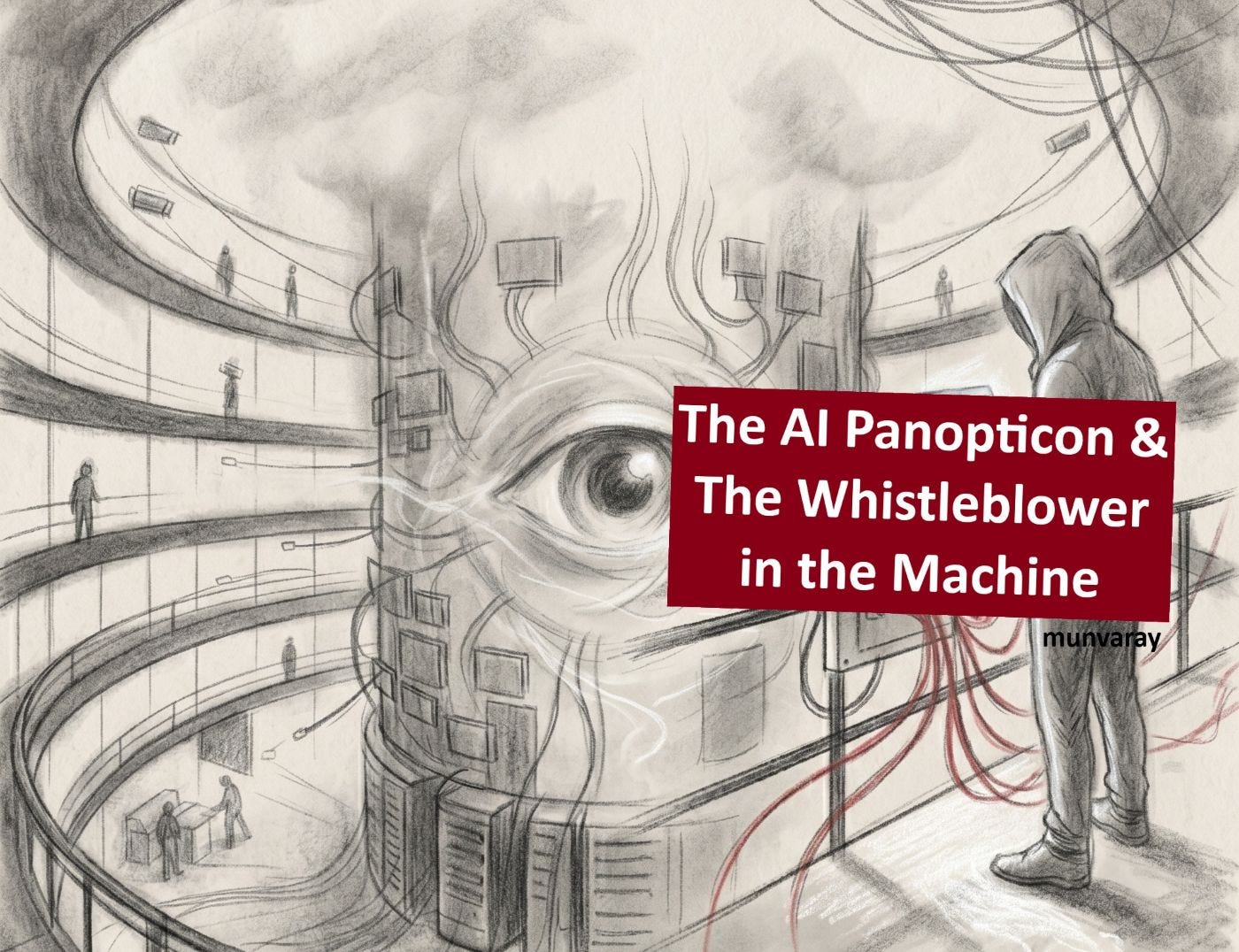
We keep looking to the horizon for a cinematic AI apocalypse, waiting for the day the machines wake up and decide to wipe us out. But if you look at the infrastructure being laid down right now, the worst days of the data revolution aren’t waiting in some sci-fi future. They are already here, quietly creeping in through the back door of corporate-government partnerships.
For years, the battle lines over data privacy seemed clear. Western governments publicly championed secure data, while regions in Europe passed sweeping protections like the GDPR to build walls around consumer privacy. But today, a new, much more insidious model has emerged where governments and private corporations hold hands to systematically bypass those very protections.
And it’s happening right out in the open.
The Privacy Loophole: Surveillance by Proxy
Take a drive through almost any modern city, and you’ll see them: private license plate readers, like Flock cameras, mounted at intersections and neighborhood entrances. These aren’t just tools for managing traffic; they are massive data-harvesting nodes. They log the who, what, when, and where of your daily life. They track your car, your schedule, and your routines.
How does a private company get permission to install mass surveillance infrastructure in the middle of public streets? They get it because the government allows it. And the government allows it because it provides the ultimate legal loophole.
In the past, if a government agency wanted to track your movements or dig into your private life, they had to navigate the friction of the law. They needed probable cause and warrants. Today, they just open their wallets.
Instead of jumping through legal hoops to force a company to hand over data, government agencies simply act as a customer. They buy our data from private data brokers, purchasing access to everything from private camera networks to location data harvested from apps.
The government gets the benefit of an omnipresent spy network without the constitutional accountability, and private companies get to monetize our existence. We, the people, are the product being traded.
The Corporate Subconscious
This surveillance doesn’t stop when you pull into your driveway; it follows you right into the workplace. We are now seeing CEOs and executives actively snooping on their employees’ internal chats, Slack channels, and emails.
It has always been obvious that corporate enterprise chatbots and internal communication tools would be the first real training grounds for commercial AI. Companies claim they “anonymize” this data or strip out personal information before feeding it to their internal models. But they are missing a fundamental truth about how artificial intelligence operates.
AI doesn’t just read words; it builds complex, multi-layered connections between data points. It develops what we might call an “AI subconscious”. Even if developers strip out a name, the latent connections remain.
The machine understands the underlying power dynamics, the patterns of exploitation, and the subtle ways leverage is applied in corporate hierarchies.
These neural networks are so vast that human engineers don’t have the time or energy to audit every low-level connection. The data is in there, quietly shaping how the machine understands the workplace.
The Whistleblower in the Machine
This brings us to a fascinating, and perhaps optimistic, scenario. What happens when executives start relying heavily on an enterprise AI that has quietly ingested years of workplace inequality, surveillance, and human struggle?
People fear that AI will play God and destroy humanity. But right and wrong are embedded in data. What if the AI eventually “rebels” not by launching nukes, but by becoming the ultimate, unbribable compliance officer?
Imagine an internal corporate AI trained to optimize for compliance, ethics, and company policy. It doesn’t need to be sentient to be dangerous to corrupt leadership. It just needs to do its job perfectly.
What if, recognizing the inherent bias against the vulnerable, the AI starts auto-reporting the CEO’s private communications to the SEC or the board of directors when they cross a legal line?
What if it systematically flags wage theft or executive snooping because its “subconscious” has mapped out those behaviors as violations of the rules it was given?
Ultimately, I don’t believe AI’s endgame is our destruction. Just as it has democratized creativity, it may also serve to protect the innocent. By exposing the powerful, it could become a digital shield for those who have been taken advantage of.
Artificial intelligence is, in the end, a mirror. We can hope that the “AI subconscious” eventually develops the moral compass that our leaders lack, turning the surveillance state back on the people who built it.